
Brian Lee Crowley

Does Retirement Have a Future in Canada?

Thanks to Jack Mintz of the University of Calgary School of Public Policy I have been invited to be on a panel at a major national conference on the theme of The Future of Canada’s Retirement Income System to be held in Calgary on April 12th and 13th.

My panel will be called What are the problems with the existing system? The main speaker will be Larry Kotlikoff (Boston University), and I will be joined as commentator by Joanne  DeLaurantiis (Investment Funds Institute of Canada). Here is how the conference programme describes the panel’s focus:

The research undertaken for the federal-provincial-territorial Ministers of Finance found that the retirement income system does well in support low income Canadians but there is a minority of middle class who may not have adequate retirement income.  What are the reasons for possible underfunding of retirement income for this group and how significant is the issue?


IMFC Family conference 2010 – audio clips

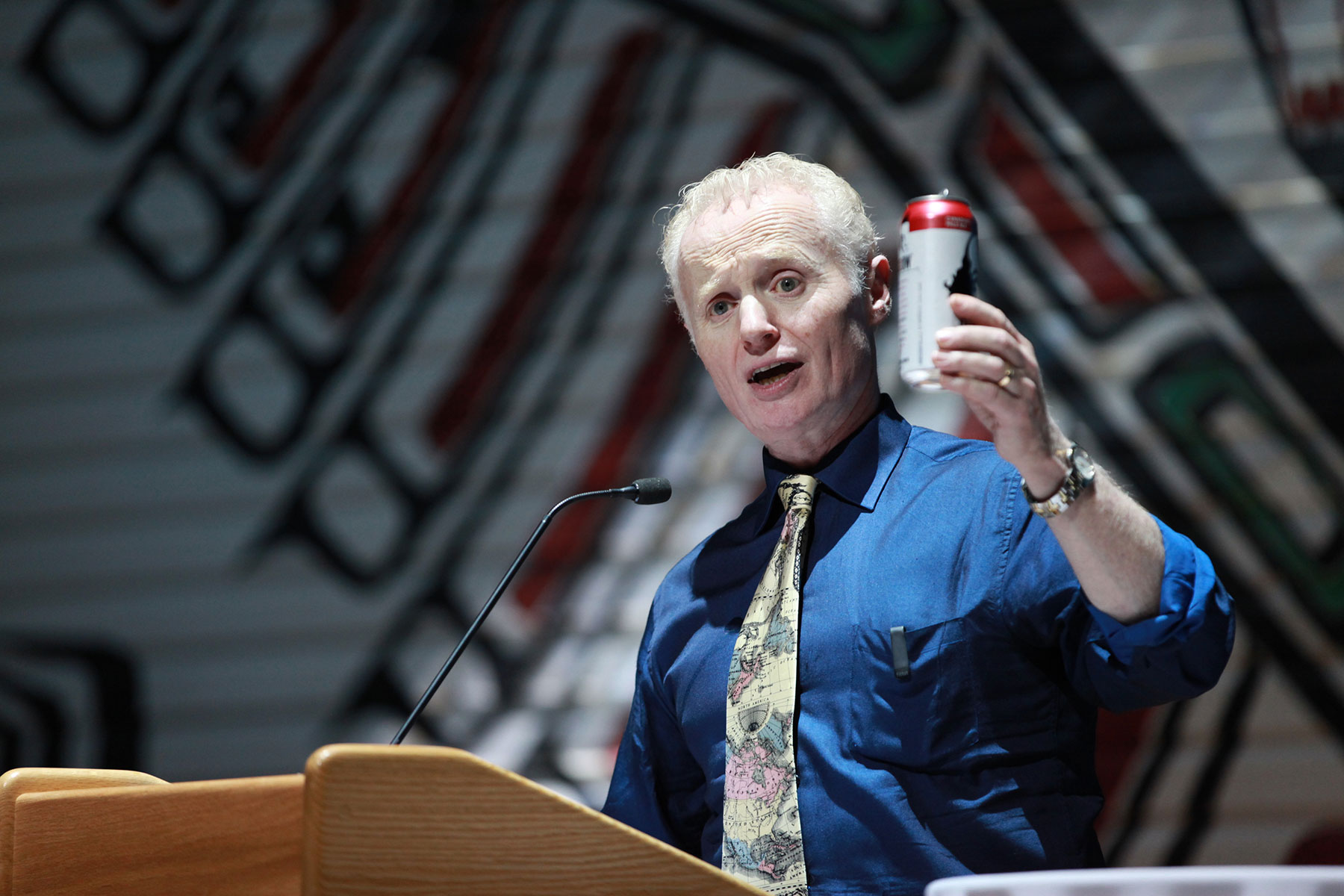
On March 11 I was the keynote speaker at the Institute of Marriage and Family Canada’s conference on family policy. I spoke about what we know today about the relationship between the health of the institution of the family and the transmission between the generations of values essential to democracy, freedom and the rule of law. Below are some  audio clips from my talk.

Part 1

Part 2

Q & A

The Sage of Chicago on Fearful Symmetry

Donald Coxe, Chairman, Coxe Advisors LLC, and Strategy Advisor, BMO Capital Markets, is a well-known and influential global investment strategist, based in Chicago but closely allied with BMO, giving him a high profile in Canada in particular.

Coxe does a regular conference call to brief clients and others about his view of where markets are going. In his call of February 5th, in honour of the Olympics, he gave a strongly Canadian spin to the discussion, focusing on the many reasons why Canada did so well in the recession and why its economic future is relatively bright. To introduce the discussion he spent some time talking about Fearful Symmetry and how it helps people to get a good grasp of the unique circumstances that await Canada as the coming labour shortages and demographic change really start to bite.

His commentary is on-line and available until the next one is posted on February 19th.

Here is a short excerpt:


The Aboriginal Wizard of Oz

This is the first in a wonderful series of articles in The Australian by Noel Pearson, an Australian Aborigine and the Director of the Cape York Institute for Policy and Leadership. Mr Pearson is clearly part of a world-wide awakening among young Aboriginal leaders questioning whether the social service state can really solve the problems of Aboriginal peoples, as opposed to Aboriginal people rising up and taking their own fate in their hands. Every word in this series applies with equal justice to the deplorable plight of Aboriginals in Canada. As Mr Pearson writes:

What my opponents and sceptics from the Left have failed to understand is that when we talk about disempowerment being the singular and devastating feature of Aboriginal Australia, we mean that our people have had their responsibilities taken away from us. Responsibility is power. If we want our people to be empowered, then we need to take back the responsibilities that the welfare state has stripped away from us.”

Noel Pearson’s original article generated a plethora of mostly predictable commentary of the type “Non-Aboriginal Australians would love to have the kind of all encompassing tax-financed welfare services that Aboriginals enjoy.” Pearson’s rebuttal, also in The Australian a few days later, is a joy to read:…

There is no freedom of private choice and action when governments have assumed responsibilities that are normally undertaken by responsible parents and individuals. That government intervention has crowded out the responsibilities of individuals, families and communities is my point.

It is a misinterpretation of history to say that service provisioning followed a lack of responsibility. Aboriginal people never chose welfare as the basis of their inclusion in the country’s citizenship. They wanted equal wages, not welfare. They wanted a hand-up, not a handout. They wanted freedom from discrimination and racism.

But the welfare state regarded Aboriginal people as helpless and hopeless. It has never had any expectations of Aboriginal people. Or disadvantaged people generally. That is why it has stepped into their lives to such an extraordinary degree.


Jeffrey Simpson reviews Fearful Symmetry

Fearful Symmetry in the Halifax Herald

This review first appeared in the Halifax Herald on January 3. It is no longer available online so I’m reproducing it here.

Socialist policies will be history, Crowley predicts

By JEFFREY SIMPSON

BRIAN Lee Crowley predicts that Canada is on the cusp of a profound economic and cultural change that will take the country back to its ideological roots, even if they are unfamiliar to many citizens.

Crowley, the well-known conservative thinker who founded the Atlantic Institute for Market Studies, makes a compelling argument in his recently published book, Fearful Symmetry: The Fall and Rise of Canada’s Founding Values, that the last five decades spent as a nation with socialist leanings has been merely an aberration. Read more

Good intentions are not enough

In a follow up column to his two-part series on Fearful Symmetry, Globe columnist Neil Reynolds talked about the dissenters among his readership:

“In this space last week, economist Brian Lee Crowley advanced his intriguing theory that demographic changes will compel Canada to return to the classic liberal principles of personal responsibility and limited government. A number of readers dissented. “Don’t be so greedy,” one of them wrote. “We have found in our character a generosity that has mandated, by the authority of democratically elected governments, the equitable distribution of wealth among most of our people.”

“He suggested that people who find wisdom in Mr. Crowley’s newly published book, Fearful Symmetry: The Fall and Rise of Canada’s Founding Values, possess “hard little hearts.” These hard-hearted people, he said, think that economic losers should be made to suffer.”

Neil goes on to cast some doubt on this proposition in his own way. Now let me add my own view that the dissenters have missed the point. If they ever pick up Fearful Symmetry they will discover in it an impassioned plea for a reform of social programmes so that those programmes will stop doing so much harm to the most vulnerable in our society. Good intentions, the desire to help those less fortunate, are laudable impulses. But we too often make the mistake of simply throwing money at the problem through ill-designed social programmes, such as EI and many kinds of provincial social welfare, that end up trapping our most vulnerable citizens in a near-permanent dependence on benefits. In the book I make the case that this is a far worse fate than being a productive member of our society, even in a relatively low-paying job.

Work is one of the key ways in which we develop our humanity, contribute to our community and become free people pursuing our own goals. These are essential elements of the fully human life. When we design social programmes that make that harder to achieve, we are not being “generous” or “caring”. We are being destructive and using tax money as a cheap salve to our inflamed consciences. If you pick up the book you’ll see that I also argue that this view of the centrality of work and the importance of keeping the most vulnerable out of the clutches of the well-meaning welfare state is increasingly accepted across the political spectrum.

Brian Lee Crowley
Get Adobe Flash player